Hartman’s AI Axiom
AI code. You might as well love it, ’cause there ain’t no leaving it.
Or another way to explain: Hartman’s AI Axiom.
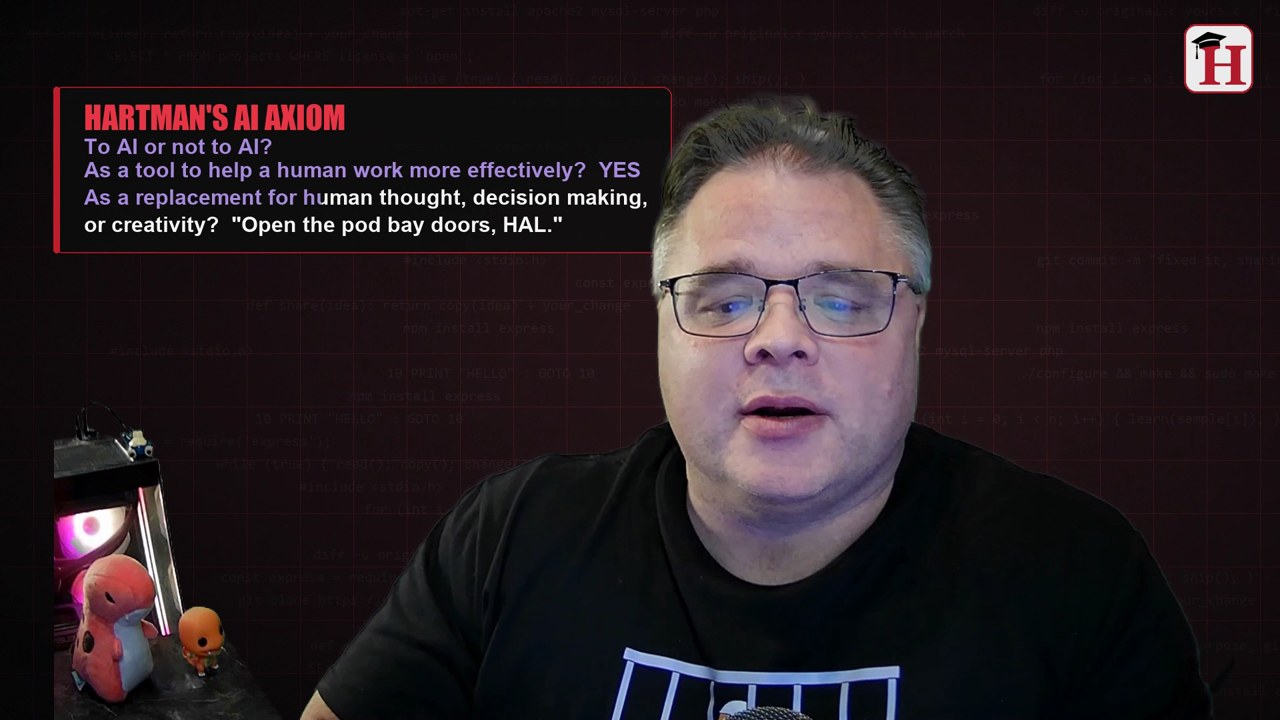
To AI or not to AI. As a tool to help a human work effectively? Yes. As a replacement for human thought, decision making, or creativity? “Open the pod bay doors, HAL.”
Strap in, because I’m going to explain why coders love AI and don’t want to let go.
Code Has Always Been About Sharing
Code has always been about sharing. You learn to code by taking someone else’s code, changing something, tweaking it, seeing if it still works, fixing it. In the old days, magazines would have code submissions you had to copy by hand. Then there was Usenet, then Stack Overflow, then YouTube, and now there’s AI. And in some ways, it’s a similar thing.
You have to keep in mind, open source came from coders. They built the software that the world runs on and gave it away on purpose for anyone to read, copy, build, learn from, train on. There’s nothing like that, nothing comparable in the world of art, music, creative writing.
Some really key stats you should be aware of. There are almost 400 million public and open source projects on GitHub alone. The 500 fastest supercomputers on the planet all run Linux.
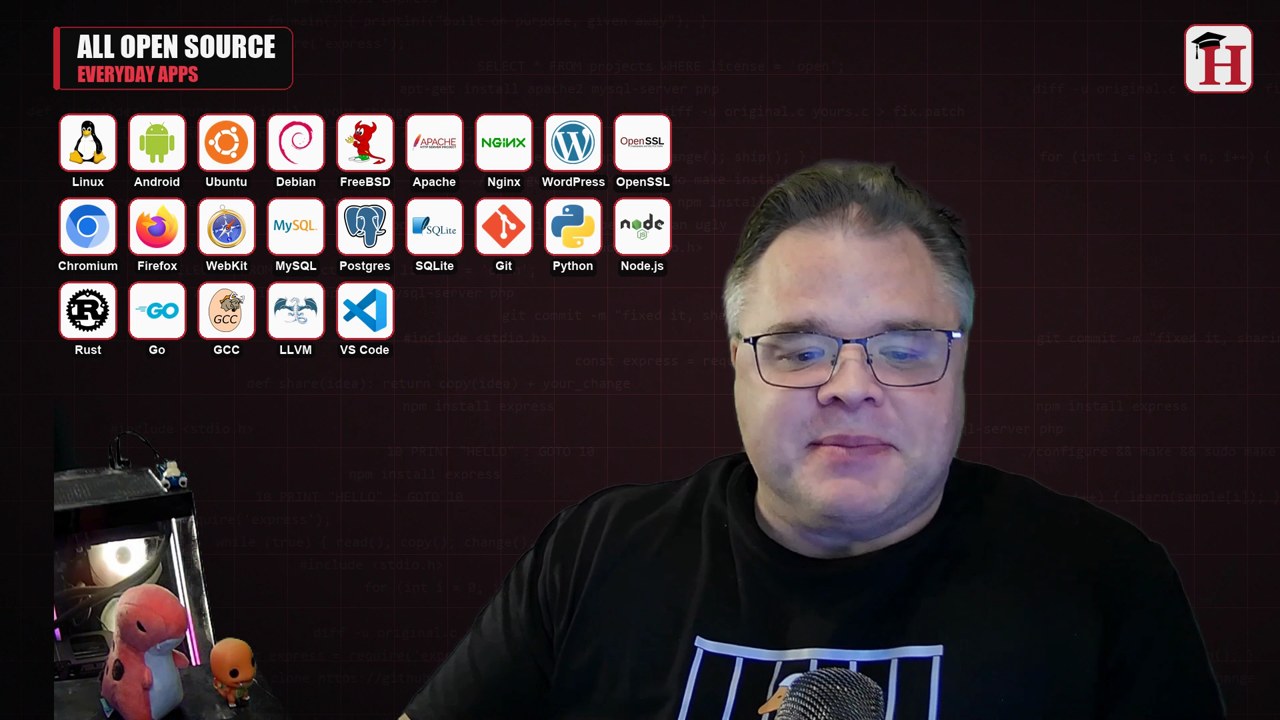
And what else do we have from open source? Well, in operating systems, we have Linux, Android, Ubuntu, Debian, FreeBSD. On the web, we have Apache. We have Nginx. WordPress powers 40% of all websites. OpenSSL encrypts most of the internet.
What about browsers? Chromium, the core of Chrome, Edge, Brave, and Opera, is open source. Firefox. WebKit, which is the basis of Safari.
What about databases? MySQL, Postgres, SQLite. They’re all open source.
And then coding itself: Git, Python, Node.js, Rust, Go, the GCC and LLVM compilers, VS Code. The tools that people use to write code are all open source, all shared.
And what about everyday apps? VLC, LibreOffice, GIMP, Blender, OBS Studio, Audacity. All open source.
Nobody Buys the Code
And let’s really think about the value the end user, at least in video games, puts on the code compared to the other parts.
A coder myself, I hate to say this. I sadly say this. Nobody kickstarted, preordered, or bought a deluxe edition of a game for a code sample. An art book? Oh yeah. An OST? Absolutely. A poster of the most elegant switch case or for loop ever written? Sadly, never.
Like I said, Kickstarters will frequently have art books and soundtracks and creator guides and things like that. Not a single code sample.

The reality is the code just does its job. Nobody is terribly enamored with it or wrapped up in the elegance of it. They just want it to do its job.
Coders Aren’t Fighting It
And coders aren’t fighting it. The reality is coders want to use AI to take away the painful parts of coding that they don’t like: debugging, finding mistakes, syntax errors, spelling errors. So they can move on to the cool parts that they really enjoy, that challenge their mind and their creativity.
In art, the people being replaced are some of the loudest critics, and that’s good. They should be. But in code, the coders are the ones that are the most loudly saying they want to use it.
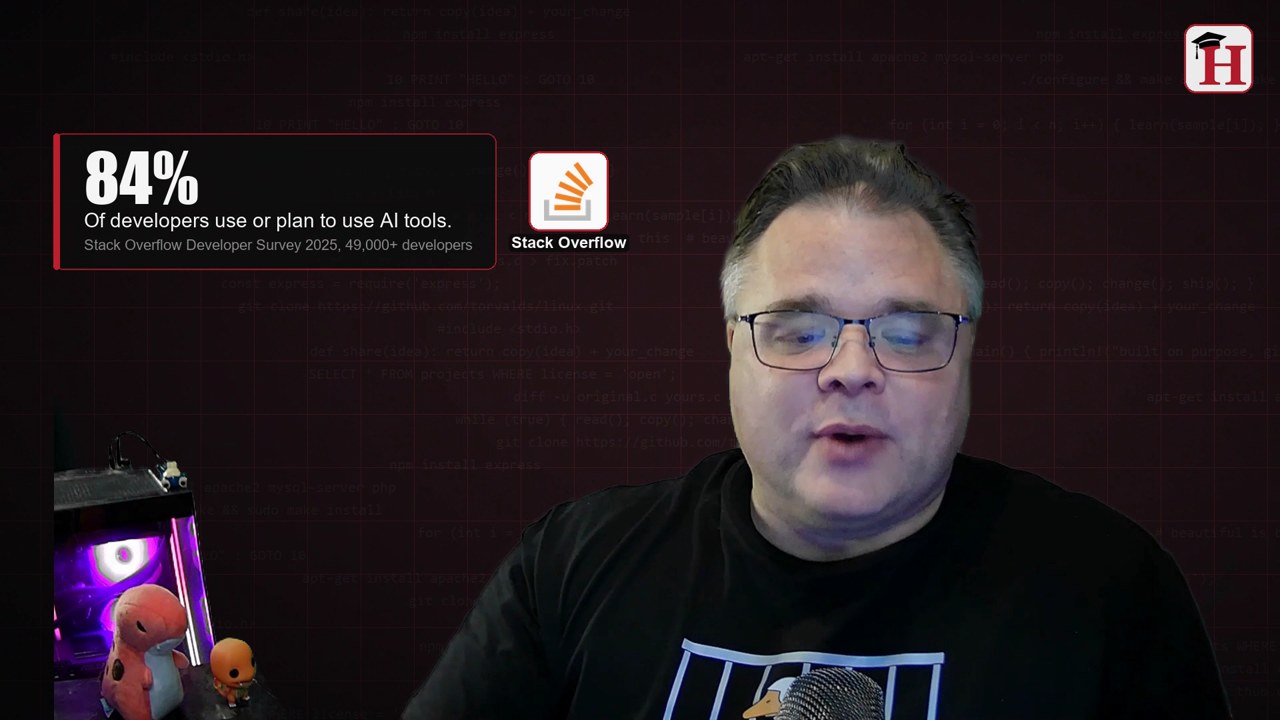
Stack Overflow had a survey last year of almost 50,000 developers. 84% were already using or planning to use AI tools. And what’s really interesting is, in that same survey, 46% of them, almost half, actually distrust the accuracy of AI. So even though they know that the tools still have problems, they still have accuracy issues and things to work out, nearly all of them either use AI already or plan to use it.
Then there’s Unity and Unreal, the two biggest engines in the video game industry, with AI assistants that write code in the editor. So it is rapidly approaching a time where you won’t be able to find a game, at least not a new game, that didn’t have AI used for writing the code.
Jobs and the Jevons Paradox
All right, let’s talk about jobs, careers, and all that good stuff.
I really appreciate and understand that one of the biggest concerns for a lot of gamers with AI coding is that potentially millions of people who went to college for computer science, or taught themselves, spent years developing their skill set, will suddenly be out of a job. And being a programmer or a software engineer is one of the more lucrative and future securing careers in society. So if that’s going away, that’s pretty terrifying.
But there is a silver lining here, or a light at the end of the tunnel, or whatever you want to call it, that has some hope for those jobs. Now let me tell you about something called Jevons paradox.
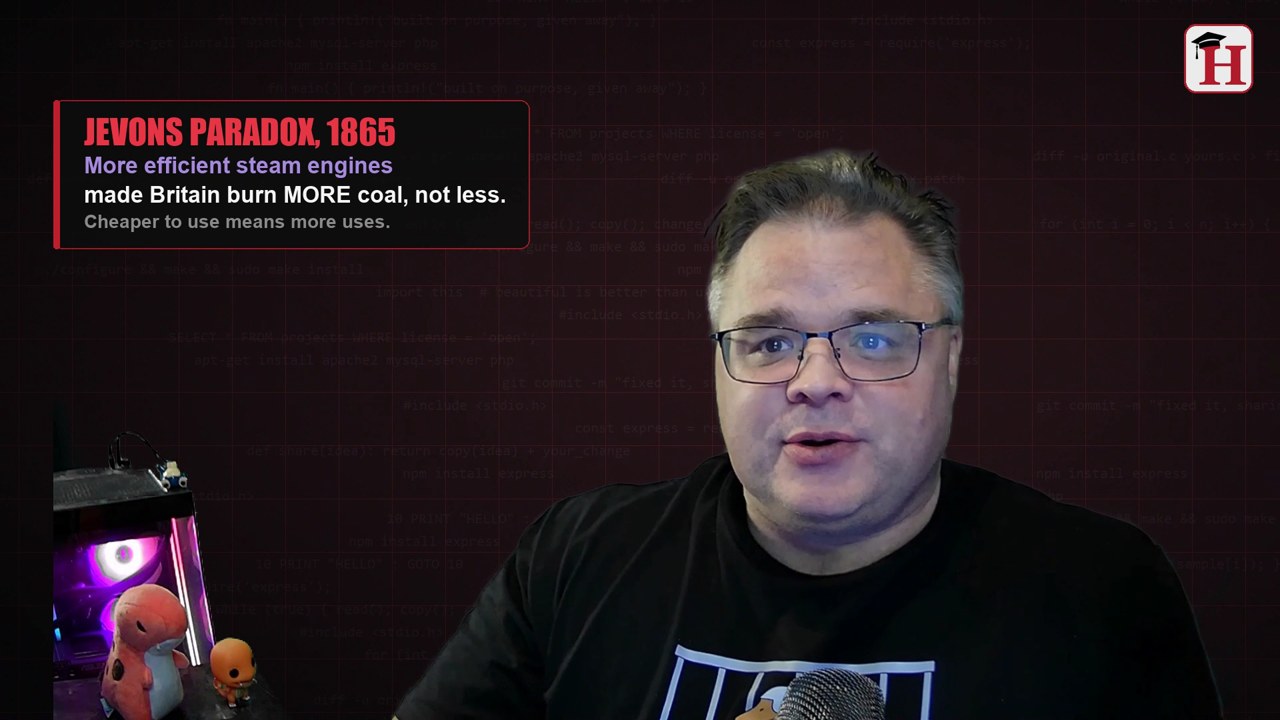
In 1865, Jevons noticed that more efficient steam engines resulted in Britain actually burning more coal, not less. When they had engines that could burn coal more efficiently, then people started to use those engines more often and burn more coal. So sometimes, even when the efficiency of the use of a resource goes up, the consumption as a result increases so much that the total use actually grows.
And we’re actually seeing this in the software engineering labor market. As AI is making software cheaper to build, more efficient to build, and ultimately better and less bugs, more projects are suddenly viable. More projects are getting greenlit by companies. People are excited to do more things. These projects grow so fast that the world needs a ton more coders, and more coders writing plugins and skills and tools for the AI itself.
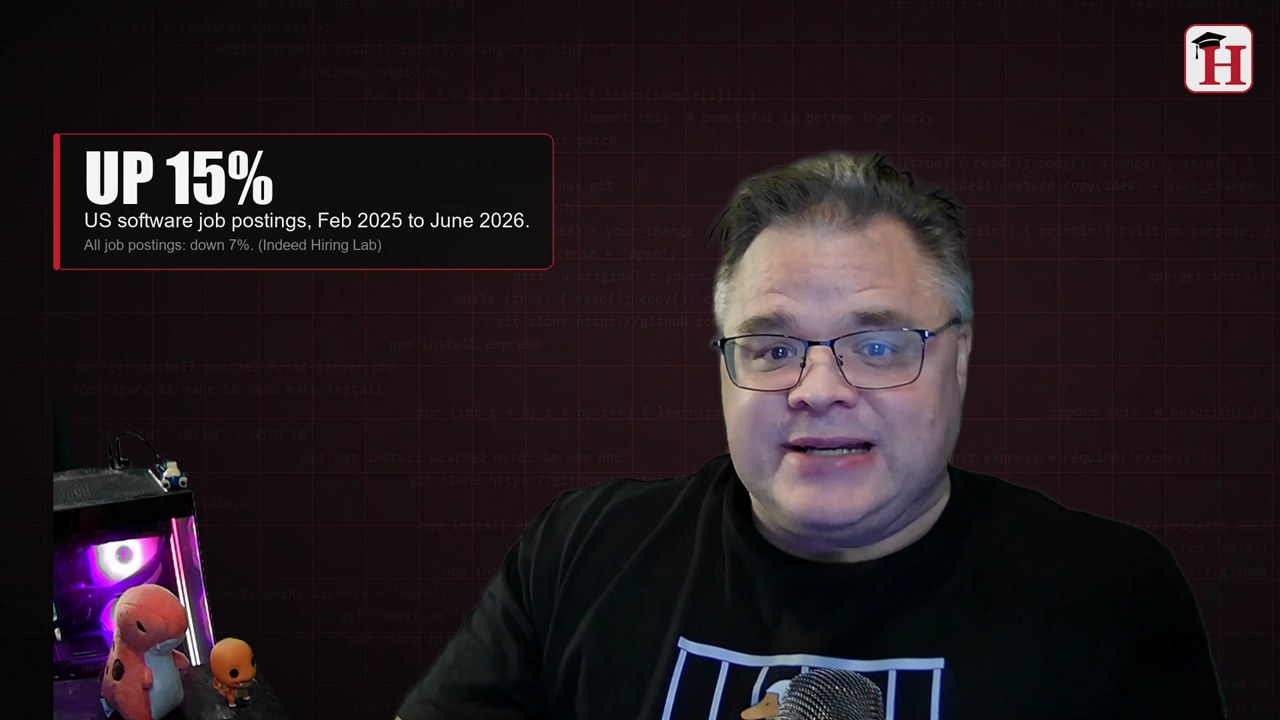
So we’re actually seeing that. From February 2025 to June of this year, US software job postings were actually up 15%, while other job postings overall were down 7%. So for software engineering jobs, at least, that’s very encouraging. And then software postings in October ’26, compared to the prior year: up 21%. So not only is it growing, that growth rate’s accelerating.
The Bureau of Labor Statistics projected growth in software jobs from 2024 to 2034 much faster than average: 15.8%. So that’s very, very encouraging numbers for the job situation.
And I think that it is one of those unique situations where, while AI is incredibly helpful and makes it easier and faster and more efficient to generate code, that just creates more options, more opportunities, more things that we can create. And that’s good for everybody.
Gamers and Disclosure
And then there are our dear and wonderful gamers, the people for whom we make these games. And without them, who would play our games?
Many of them are saying, “We don’t want AI in our games.” And that is an extremely fair and understandable opinion. And I completely feel for this. I love that gamers don’t want human game developers replaced. My appreciation for that, my heart goes out to them, and it is a wonderful sentiment.
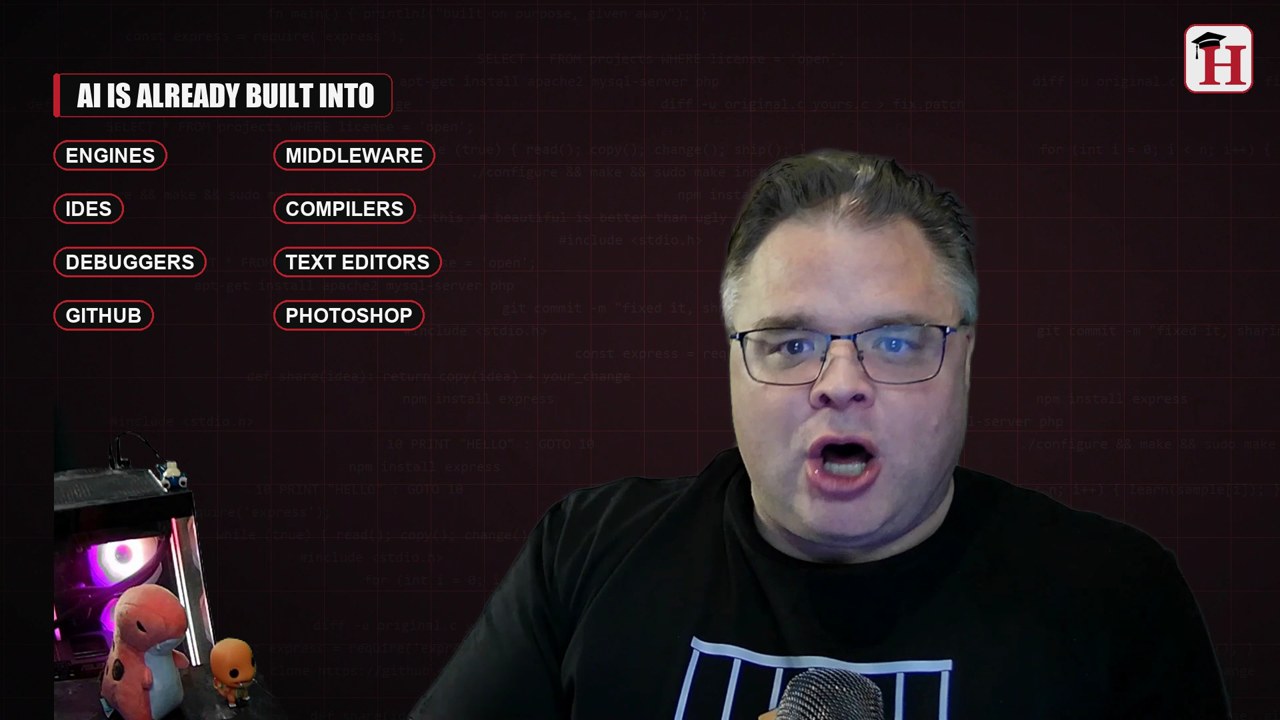
But the thing is, when engines, middleware, IDEs, compilers, debuggers, text editors, GitHub, dev and asset tools like Photoshop all have AI built in, well, what then? It’s barely possible to make a game without AI automatically being involved.
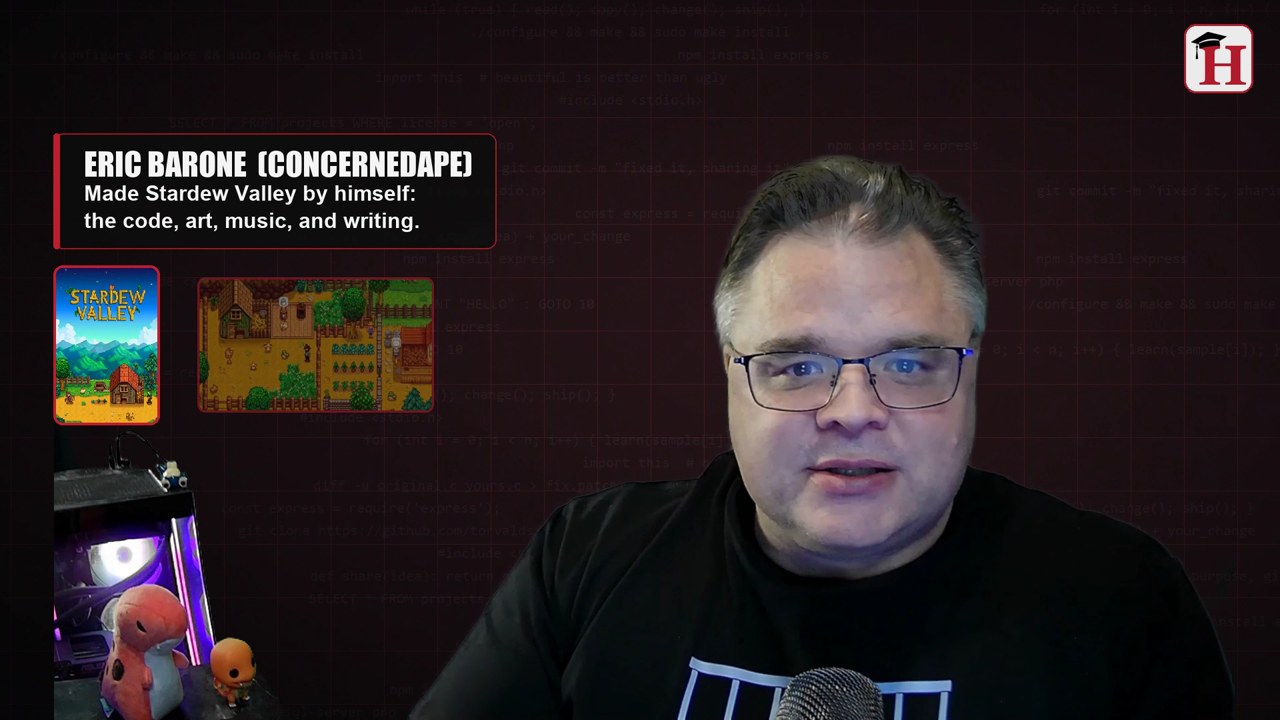
And if AI lets brilliant creative people realize their dream games, and those games are fun, will it really matter? I mean, we aren’t all Eric Barone, also known as ConcernedApe. You know, we can’t all create our dream masterpiece by ourself. AI is going to let more people create games like that.
So some people say, okay, fine. Then what about disclosure? Just make sure everybody discloses what AI was used and how much AI was used, and then we can make our own decision.
As a universal principle, the problem is it’s virtually impossible to comply with. It’s definitely impossible to enforce, and it creates endless gotcha moments for people who frequently are acting in bad faith. We have seen incidents of that already.
Now, internal disclosure rules make perfect sense. Godot has a rule that says if you send them code and you used AI to write it, you must tell them. And at the moment, I believe they will reject all that code. Now, that does create a danger and a motivation for people to lie, which gets us back to the other problem I mentioned before.
But other code repositories, they might say, hey, we want to know what happened and what went into each piece of code. So if you send us a chunk of code, we need to know if AI was involved. Because if it gets approved and added to the code base, and then in the future people are trying to debug it, that could be relevant. Especially, what if a certain LLM has a coding style that gets found to create certain types of vulnerabilities or certain types of bugs? And just knowing that in the dev notes could help people fix things in the future.
But for every game to disclose every bit of AI they used, that’s going to be virtually impossible. They may not know what every single employee on their team did. There’s contractors. There’s people who come in and out. There are studios that are in five different cities, in five different countries sometimes. There are things bought from an asset store. There are things inherited from previous versions of your game, in a sequel or in a franchise. And like I said before, you definitely don’t know about most of the middleware. So it’s a really difficult thing to comply with.
And depending on how the public decides to take it, a completely good faith error and disclosure could destroy your game.
Art Honors the Process
Art honors the process. Code abstracts it away.
In art, the process is just as important as the result. Even in the digital age, artists still sketch on a pad or paint on a canvas, and that is considered just as interesting and just as valuable as the final product.
My daughter is a professional artist, Green Grubber Creations, if you want to check out some of her work. She creates art in so many different mediums, I couldn’t even begin to list them all. But for many of them, chalk pastels for example, she posts a lot of time lapses of the process. And the process is unbelievable.
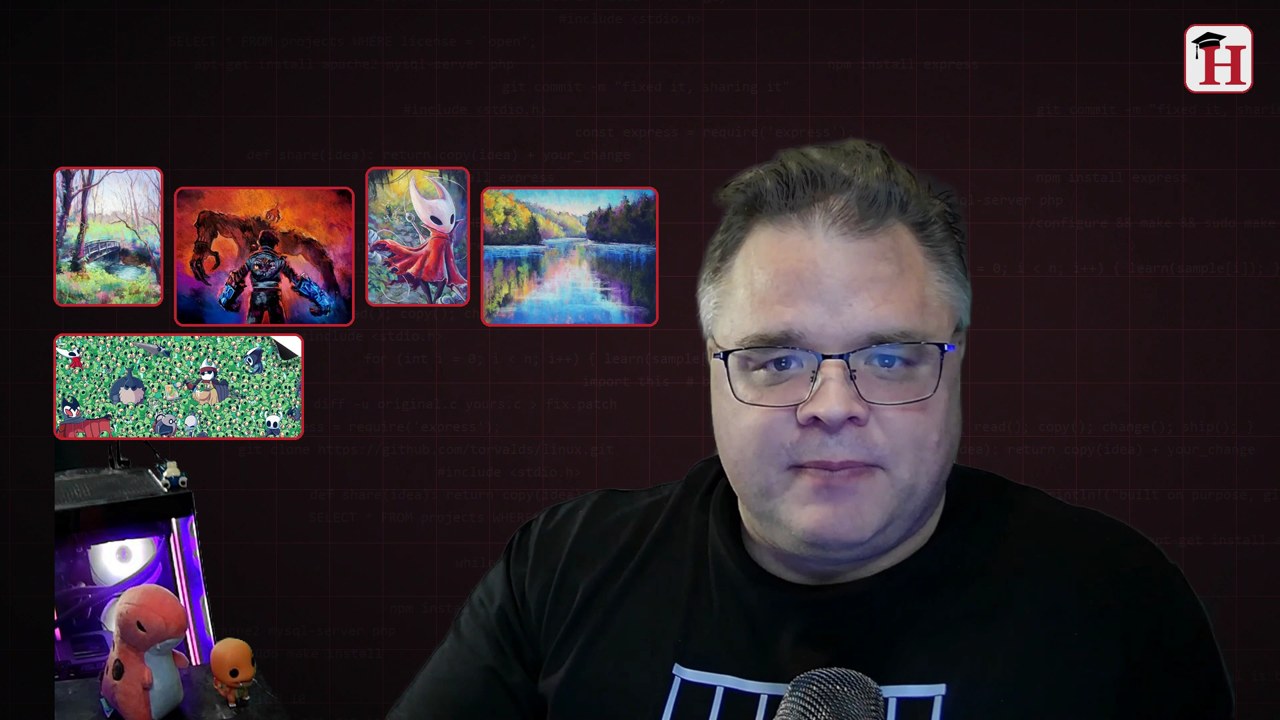
I’m probably going to use the wrong terms here, but the undercoat, or the under layer, for a pastel: you can tell eventually where some of those colors came through, but I still don’t understand how she makes that layer. But that process is, it’s almost like magic. And getting to watch that, getting to watch her pieces get made, is incredible.
I remember in the early days of League of Legends, they used to post time lapses of their artists photoshopping and drawing the main champion portraits for the splash screens. And those were incredible too. People enjoy that. The entire process of creating a piece of art is amazing and interesting, but it’s not that way for code.
When we develop new methods, we discard the old methods. We don’t go back to them. Not for nostalgia, not for charm, not for anything. And if we did, the result would be useless.
From Punch Cards to Plain English
Nobody codes with punch cards anymore. Barely anyone writes assembly code or machine code. Code is constantly creating more layers of abstraction on purpose.
Andrej Karpathy, a cofounder of OpenAI, says, “The hottest new programming language is English.”
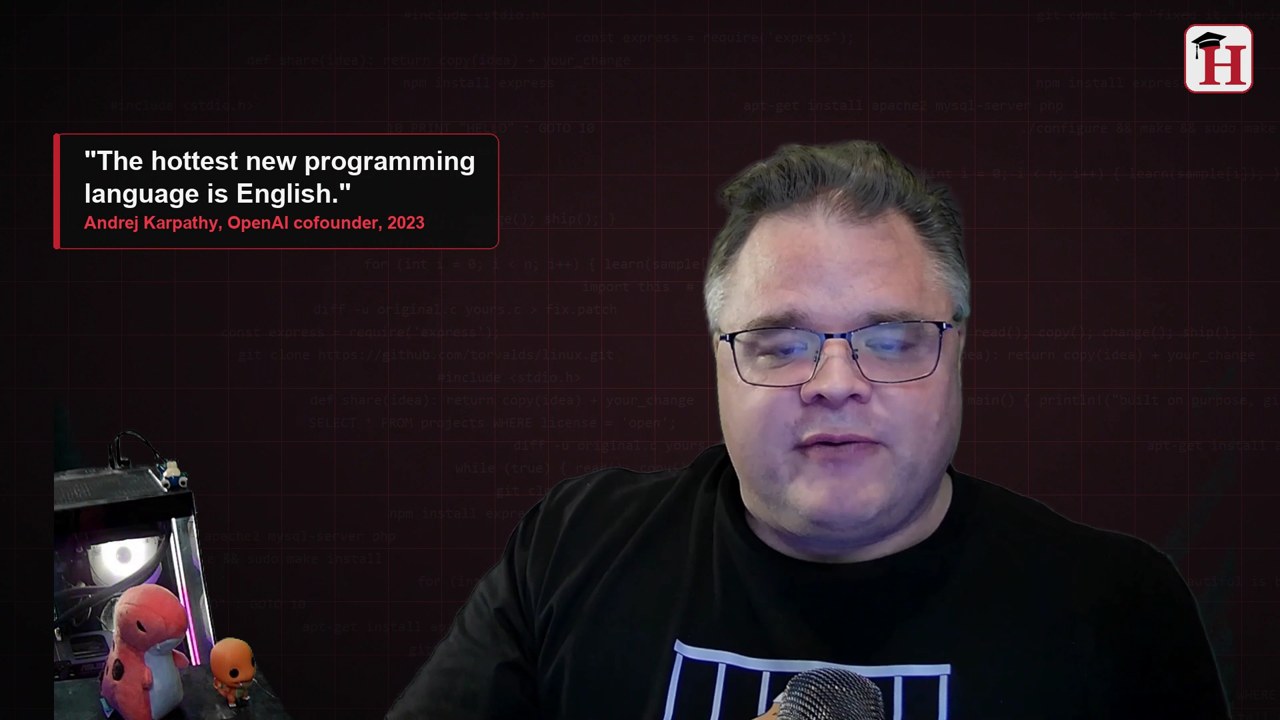
That’s the direction code has been moving from the very beginning. We have always wanted to abstract things away so that the way we work is as close to human understandable language as possible, for our simplicity.
Final Thoughts
While contemplating the difference between AI use in code and AI use in art, I have a very important question for you. How different are these next two things?
Writing instructions for an AI to write Python code.
Writing instructions for a Python interpreter to write machine code.
What do you think?
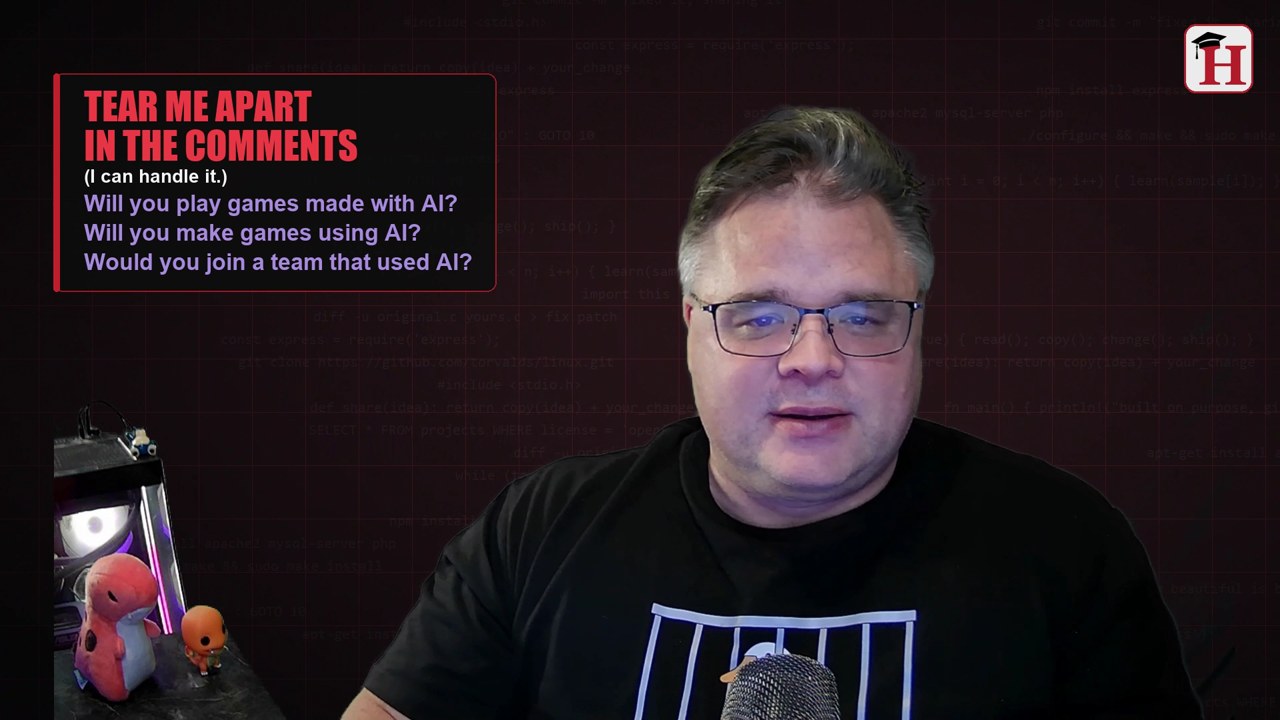
Q1) Will you play games made with AI?
Q2) Will you make games using AI?
Q3) Would you join a team that used AI?
Tell me down in the comments.
And if you aren’t sure what to say, just go with: “I’m sorry, Professor. I’m afraid I can’t do that.”